Ask ten different people what video production means and you will probably get ten different answers. Some picture someone holding a fancy camera. Others think of Hollywood sets with cranes, lighting rigs and a director shouting through a megaphone. The real answer sits somewhere in between, and understanding it properly can save a business a lot of wasted money and confused meetings down the road.
At its core, video production is the process of turning an idea into a finished video, starting from the first rough concept and ending with a polished file that is ready to post on YouTube, run as an ad, or sit proudly on a company website. It is not one single job. It is a chain of smaller jobs that all have to line up correctly, and when one link in that chain breaks, it usually shows up on screen in ways viewers notice even if they cannot name exactly what went wrong.
This article walks through what video production actually involves, why it has become such a big deal for businesses of every size, what the process looks like from start to finish, and what to expect if you are about to hire someone to make a video for you. If you have searched around for services before and felt a bit lost by the jargon, this should clear things up.
Why Does Video Production Matter for Businesses Today?
A few years ago, video felt optional, a nice to have for companies with a marketing budget to spare. That is not really true anymore. People scroll through feeds full of moving images all day, and a static photo or a wall of text has a hard time competing for attention next to a well made video.
There is also a trust factor at play. Watching a real person talk about a product, or seeing a process filmed from start to finish, tells a viewer something that text alone cannot. It shows them the thing is real. Founders who appear on camera build a kind of familiarity with their audience that a blog post rarely creates on its own.
None of this means every business needs a Hollywood budget. A small clothing brand filming product try-ons with a phone and a ring light is doing video production too, just at a different scale than a national ad campaign. What matters is that the video actually does its job, whether that job is explaining a service, building trust, or simply catching someone’s attention long enough for them to keep watching.
Search engines have also started favoring pages with video content, and platforms like Instagram, TikTok and YouTube reward creators who post consistently. That combination has pushed even reluctant business owners to figure out how video works, because ignoring it now has a real cost in visibility.
What Are the Different Types of Video Production?
Not all videos serve the same purpose, and knowing the type you need before you start saves everyone a lot of back and forth.
Corporate videos cover things like company culture pieces, training material, and internal communications. They tend to be less flashy and more focused on clarity than on spectacle.
Commercial and brand videos are built for marketing. Their entire purpose is to move someone from noticing a product to wanting it, so pacing, music and messaging matter enormously here.
Explainer videos break down a product or service in a minute or two, usually with simple animation or screen recordings paired with a voiceover. Software companies rely on these heavily because a demo often explains more in ninety seconds than a page of copy ever could.
Documentary style videos tell a longer story, often about a person, a cause or a process. They take more time to shoot and edit, but the payoff is a piece of content that feels genuine rather than salesy.
Event coverage, testimonials, social media shorts and product focused pieces round out the list. A single business might end up needing several of these types across a year, which is one reason working with a team that understands the full range tends to work out better than piecing projects together from different freelancers each time.
What Happens During Each Stage of Video Production?
This is the part most people get wrong when they imagine the process. They think of production as just the day the camera is rolling. In reality, that is only the middle third of the work.
Pre-production is where the real planning happens, and honestly, it is where most projects succeed or fail. This stage includes writing or refining the script, building a shot list, scouting locations, casting talent if needed, and working out a schedule that respects everyone’s time. Skipping this step to save a week almost always costs more time later, because problems that could have been caught on paper show up instead on set, where they are far more expensive to fix.
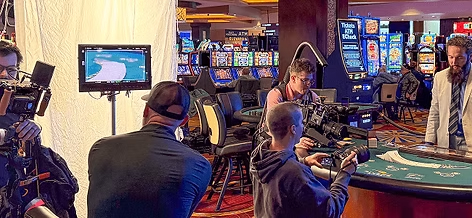
Production is the shoot itself. Cameras, lighting, sound and direction all happening at once, usually against the clock because locations and talent cost money by the hour. A good production day looks calm from the outside even though a dozen small decisions are being made every few minutes about framing, performance and timing.
Post-production is everything that happens after the cameras stop rolling. Editors sort through hours of footage, choose the best takes, cut them together with a rhythm that keeps people watching, add music, clean up the audio, apply color correction, and layer in graphics or titles where needed. This stage often takes longer than people expect. A three minute finished video might represent forty or fifty times that in raw footage that had to be reviewed and trimmed down.
Distribution sometimes gets treated as an afterthought, but it deserves its own attention. A video cut for a sixteen by nine YouTube upload will not work as a vertical Reel without changes, and ignoring platform requirements means good footage ends up looking awkward or gets cropped in ways that hurt the message.
How Much Does Professional Video Production Cost?
This question comes up constantly and there is no single honest answer, because cost depends on so many moving pieces. A talking head video shot in an office with one camera and natural light might run a few hundred dollars with a small local team. A multi day commercial shoot with a crew, actors, custom locations and heavy post production work can run into the tens of thousands.
The factors that push price up or down usually include the length of the final video, how many days of filming are needed, whether professional actors or voiceover talent are hired, how much travel is involved, and how complex the editing and graphics work turns out to be. Animation tends to cost more per finished second than live action because every frame is built by hand rather than captured in one pass.
A useful way to think about budget is to ask what the video needs to accomplish and work backward from there rather than picking a number first and hoping it stretches far enough. A modest video that generates real leads is a far better investment than an expensive one that nobody watches past the first ten seconds.
How Do You Choose the Right Video Production Company?
Portfolios matter, but not in the way most people assume. A flashy reel does not tell you whether a team can handle your specific project, your industry, or your budget. What tells you more is asking to see work similar in scale and tone to what you are planning, then asking direct questions about how that project actually went.
Communication style is worth paying attention to early. If a company is slow or vague when you are just asking questions before signing anything, that pattern rarely improves once money has changed hands. Clear pricing, a defined process, and a willingness to explain their thinking rather than just showing you a slick sales deck are all good signs.
It also helps to ask who will actually be on set. Some companies bring in freelancers for every project, which is not necessarily bad, but you want to know that going in rather than discovering it on shoot day. Consistency matters more when you plan to produce multiple videos over time, since a team that already understands your brand voice moves faster on every project after the first.
What Equipment and Skills Go Into Quality Video Production?
Cameras get most of the attention, but they are really only one piece of the puzzle. Lighting shapes mood more than almost anything else in a frame, and a cheap camera with great lighting will usually beat an expensive camera lit poorly. Audio matters even more than most beginners expect, because viewers forgive shaky visuals far more easily than they forgive audio they cannot understand.
On the human side, a director needs to know how to pull a natural performance out of someone who has never been on camera before, which is a skill closer to coaching than to technical operation. Editors need a sense of rhythm, almost musical, to know when a cut should land and when a scene needs to breathe a little longer.
Increasingly, teams also need comfort with motion graphics software, color grading tools, and an understanding of how each platform’s algorithm treats different formats. A team that only knows how to point a camera and hit record is missing most of what separates forgettable footage from something people actually want to watch and share.
What Trends Are Shaping Video Production in 2026?
Shorter formats keep gaining ground, but that does not mean long form content is dying. What is changing is intent. Short videos hook attention and drive discovery, while longer pieces build depth once someone is already interested. Smart brands are using both rather than picking one over the other.
AI tools have started showing up throughout the production pipeline, from rough cut assistance to automated captioning and even early stage script drafts. Most experienced editors treat these as time savers rather than replacements, since the judgment calls that make a video feel human still come from a person watching footage with actual context about the audience.
Authenticity keeps winning over polish. Viewers have grown skeptical of anything that feels overly produced, and raw, slightly imperfect footage often performs better on social platforms than a heavily scripted commercial would. That does not mean quality no longer matters, it means the definition of quality has shifted toward feeling real rather than feeling flawless.
Vertical video is no longer a side format either. Plenty of productions now shoot with vertical delivery as the primary plan rather than an afterthought cropped from horizontal footage, because so much viewing now happens on a phone held upright.
Sustainability and smaller crews are also becoming more common, partly out of cost pressure and partly because compact, efficient setups can move faster and adapt on the fly when a shoot day does not go exactly to plan, which, honestly, almost none of them do.
How Do You Measure Whether a Video Production Actually Worked?
Views get all the attention, but they are usually the least useful number on the dashboard. A video can rack up thousands of views and still fail if nobody watches past the first five seconds or takes any action afterward. Watch time and completion rate tell a much more honest story about whether the content actually held people’s interest.
For anything tied to marketing goals, the metrics worth tracking are the ones connected to what the video was meant to do in the first place. An explainer video should be judged on whether it reduced support questions or increased sign ups. A brand awareness piece is fairly judged on reach and engagement rather than direct conversions, since that is not really its job.
It also helps to look at where people drop off. If a two minute video sees a steep drop at the fifteen second mark, that usually points to a weak opening rather than a problem with the rest of the edit. Small adjustments to the first few seconds of future videos, based on that kind of data, tend to produce better results than reshooting the entire concept from scratch.
None of this replaces a gut check either. Sometimes a video underperforms on paper but still does real work, building familiarity with a brand that shows up later as a direct message or a sale weeks down the line. Numbers matter, but they are one part of a bigger picture that also includes comments, shares, and the quieter signal of people simply remembering the brand next time they need what it offers.
Bringing It All Together
Video production is not magic and it is not as complicated as the jargon sometimes makes it sound. It is planning, filming and editing done well enough that a viewer forgets they are watching a produced piece of content and just pays attention to the message. Whether a business needs a single explainer video or an ongoing stream of social content, understanding the process, the cost drivers and the questions worth asking before hiring anyone puts that business in a far stronger position than walking in blind.
The businesses that get the most out of video are usually the ones that treat it as an ongoing part of how they communicate, not a one time project checked off a list. Once the first video is done, the second one almost always comes together faster, cheaper and better, simply because everyone involved already understands what works.
Frequently Asked Questions
What does a video production company actually do?
A video production company handles the full process of making a video, from planning and scripting through filming and editing. Some also handle strategy, distribution and paid promotion, so it is worth asking exactly what is included before signing a contract.
How long does it take to produce a video?
It depends heavily on complexity. A simple talking head video might be ready in a week. A commercial with multiple locations, actors and heavy post production work can take a month or more from first meeting to final delivery.
Do I need a big budget to get a good video?
Not necessarily. Plenty of effective videos are made with modest budgets when the concept is strong and the execution is clean. Budget affects scale and polish more than it affects whether a video actually connects with viewers.
What is the difference between production and post production?
Production refers to the actual filming, cameras rolling and everything happening on set. Post production is everything that happens afterward, including editing, color correction, sound design and adding graphics or titles.
Can I use my phone for video production?
Yes, for many projects a modern phone camera is more than capable, especially paired with decent lighting and a good microphone. Where phones tend to fall short is in situations needing specific lenses, controlled depth of field or professional level color grading.
How do I know what type of video my business needs?
Start with the goal. If you want to explain a product, an explainer video usually works best. If you want to build trust, testimonials or behind the scenes content tend to perform well. If the goal is broad awareness, a short, punchy brand video aimed at social platforms is often the right call.
What should I prepare before my first video shoot?
A clear script or outline, a short list if possible, and a realistic sense of the message you want viewers to walk away with. The more clarity brought into pre production, the smoother the actual shoot day tends to go.