
Just imagine the smell of freshly baked bread fills your kitchen, not a bread though, but the loaf of bread with rich, tangy taste, toothsome inside, and the super crunchy, crackling guilt. And this is what the magic of homemade sourdough bread is, an ancient craft that has experienced a giant revival in the contemporary kitchen. To some people, it is an intimidating job that only professional bakers engage in. But it is quite easy to acquire the skills of making this marvelous artisanal loaf by giving just some time and knowledge. The following guide will de-mystify the process and give you the necessary knowledge that you would need in order to start a profitable baking journey.
What Makes Sourdough Bread So Special?
Unlike regular bread, on which commercial yeast is used, the leavening of the sourdough bread is done with a sourdough starter. It is a living yeast and healthy bacteria (lactobacilli) which naturally occur in flour and air. This fermentation is the very thing that brings the bread that tangy taste and the unique texture and a whole lot more benefits. The long-soaking dissolves the gluten and lowers phytic acid in the flour which makes the finished product more digestible to many humans. It also helps to have higher shelf life since the acetic acid, which forms during the reaction of the bacteria, is a natural preservative. The outcome is not simply a piece of food, but rather a tribute to a natural, time-tested technique that allows turning simple ingredients: flour, water, and salt into a real miracle.
The Heart of the Loaf: Nurturing Your Sourdough Starter
The only thing that has to come before the baking of a loaf of sourdough bread is the creation or procurement of a sourdough starter. The driver of the whole process is this living culture. Although it may require a week or more time to create one out of nothing, it will be easy to maintain when it is created and running. A good starter should be bubbly, pleasant and slightly sour-smelling, and should certainly expand by a couple of times the given volume within a few hours after being fed.
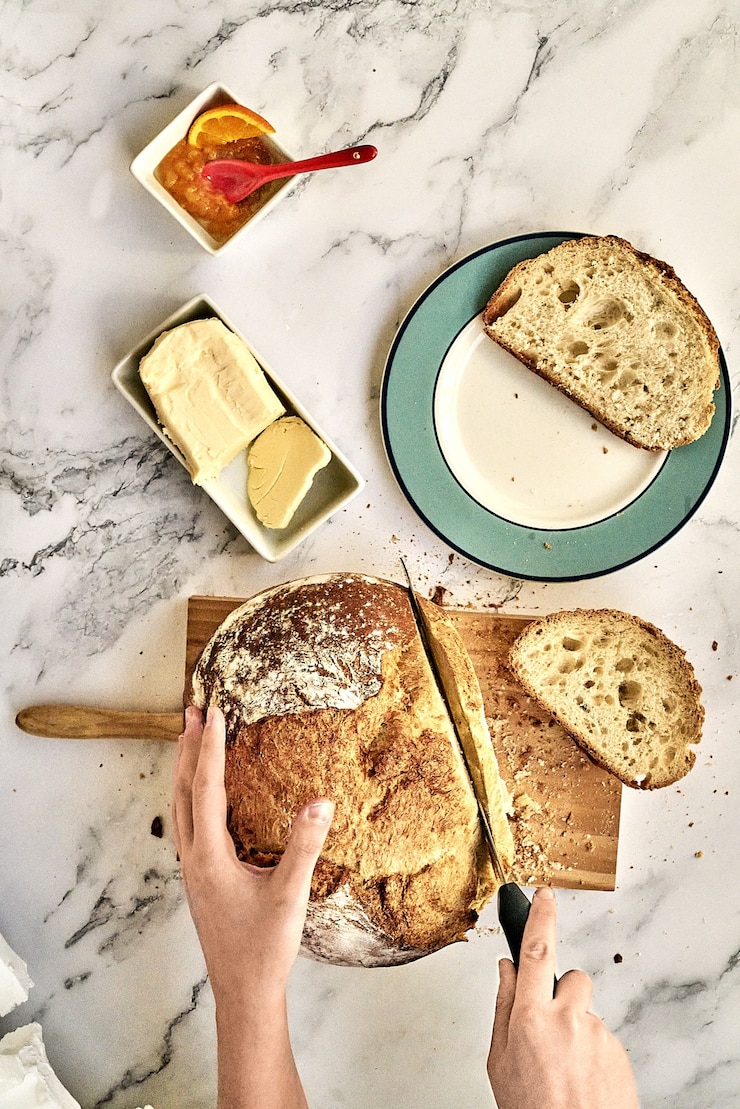
The following are some of the important tips in caring of the starters:
- Regular Feeding: A starter requires frequent feedings of fresh flour and water, to remain active and strong. The most typical frequency is 12-24 hours (when stored at room temperature) and once per week (when stored in the fridge).
- A kitchen Scale: A kitchen scale is precise. Weighing your flour and water (in grams) as opposed to measuring yields better consistency in the hydration level of your starter, and consequent results in sourdough bread.
- Observe and Learn: Watch the behaviour of your starter. Is it predictable in terms of rising and descending? Does it have that yeasty tangy smell or is it too sour? These notes would be very important in order to know about its healthiness and its preparedness to be baked.
Essential Tips for Baking Your First Loaf of Sourdough Bread
At this stage the starter is ready: it must be bubbly and and energetically fermenting. Baking is the next step. Although recipes are different, the basic guidelines are the same everywhere. If you introduce yourself to sourdough baking, it is better to pay attention to the technique rather than to the tricky recipe.
- Learn to stretch and fold: Most sourdough bread dough is formed with a careful stretch and fold instead of being vigorously kneaded. This slow fermentation of gluten forms the open airy crumb that bakers work towards.
- Fermentation Control: During the very first rise (called the bulk fermentation) a lot of the flavor gets developed. The process is very room temperature sensitive. The warmer the room, the faster the fermentation will occur and the colder the room, the slower the fermentation. It is more essential to learn how to read the dough with the help of watching it become airy and expand in size than to follow a timer.
- The Magic of a Dutch oven: A Dutch oven is a revelation when it comes to homemade bread. This captures some steam during bread baking which makes the crust soft when the bread is still young thereby enabling the bread to rise to full extent in the oven (a process known as ovenspring). The cover is then lifted in the last leg of containing the bake to give the baked bread a deep brown crispy shell.
- Ingredient of Patience: It is arguably the best advice to be patient. Making sourdough bread is something that does not go faster, starting with feeding the starter until the last loaf of bread is cooled off, before cutting. It is very important that loaf is left to cool down not less than two hours so that the internal structure would be set correctly.
Conclusion
The process of sourdough bread learning is a really gratifying process. It relates the baker to a tradition which is thousands of years old and imparts very important lessons about patience and observing things. The initial loaf may not turn out the way you want it too but every time you bake you will learn and get closer to that perfect, tasty result.
Call-to-Action (CTA)
What are your greatest questions or obstacles about baking sourdough bread? Write about it in the comments below