Most people know they should eat more fiber. Fewer people actually do. Federal dietary guidelines point to about 14 grams of fiber for every 1,000 calories, which works out to roughly 28 grams a day on a standard 2,000 calorie plan. Surveys keep showing that the typical adult lands closer to 15.
That gap is where a fiber drink mix enters the picture. It is a powder you stir into water, and it delivers a measured dose of fiber in a form that takes about thirty seconds to prepare. Below, we break down what these mixes contain, how the fiber behaves once you swallow it, who tends to benefit, and how to take one without ending up bloated and annoyed.
What Is a Fiber Drink Mix?
A fiber drink mix is a powdered supplement, usually sold in single serve sticks or a tub, that you dissolve in water to add soluble fiber to your day. A serving typically supplies between 3 and 8 grams of fiber, which is a modest but useful slice of the daily target.
What Does a Typical Serving Contain?
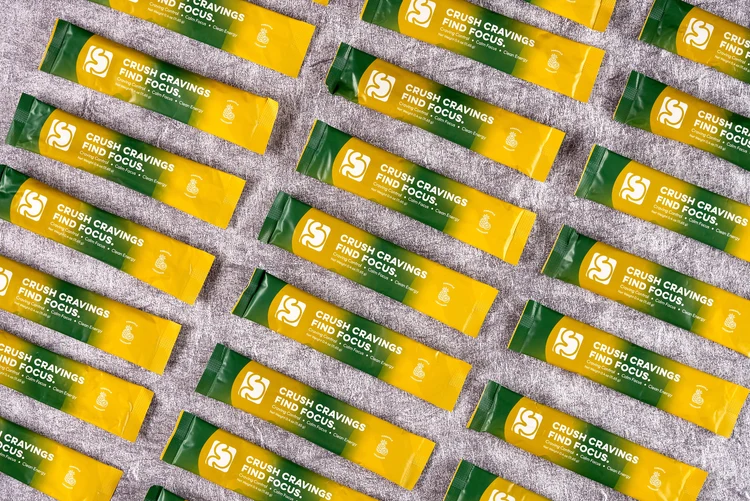
The base is almost always one or two soluble fibers. Psyllium husk is the classic, pulled from the seeds of a plant called Plantago ovata. Acacia fiber, also known as gum arabic, is another common pick. Some brands use inulin, wheat dextrin or methylcellulose instead. Beyond fiber, formulas vary a lot. A few add flavoring, a low calorie sweetener or a little citric acid for taste. Others, like Hunger Busters, pair fiber with extras such as saffron extract and L-theanine. The label tells you the fiber source and the grams per serving, and those two lines matter more than anything printed on the front of the pouch.
It also helps to know what you will not find. A well made mix should not hide amounts behind a proprietary blend, and it should not rely on sugar to cover a chalky taste. If a label lists a fiber dose but no source, or a source with no dose, put the tub back and keep looking.
How Is It Different From a Fiber Pill or Gummy?
Capsules and gummies sound convenient, but the math is unkind. Many capsules hold only half a gram of fiber, so you would swallow six or more to match one serving of powder. Gummies often carry added sugar and only a gram or two of fiber. A drink mix packs the dose into one glass, and the water that comes with it does real work, because soluble fiber needs fluid to form its gel. If you dislike swallowing pills, or you want a bigger dose than a gummy can hold, powder is the more practical format.
How Does a Fiber Drink Mix Work in Your Body?
Soluble fiber absorbs water, thickens the contents of your stomach and intestines, and slows how quickly food moves along. That slower pace is why fiber is linked with steadier fullness, smoother blood sugar and more regular digestion.
Why Does Soluble Fiber Turn Into a Gel?
Soluble fibers have long chains that grab water molecules and hold on to them. Psyllium is the best known example. Stir it into a glass and, within a couple of minutes, the liquid starts to thicken. That thickness is the point. Inside your stomach, the gel slows gastric emptying, which keeps fullness signals going to the brain longer than a plain glass of water would. It is also why most brands tell you to drink the mix promptly. Left on the counter, it turns from a drink into something closer to pudding.
What Happens in Your Gut Afterward?
Some fibers pass through mostly intact, adding softness and bulk to stool. Others, such as acacia, are fermented by bacteria in the colon. That fermentation produces short chain fatty acids, compounds researchers link with gut lining health and with hormones like GLP-1 and PYY that play a part in appetite. Fermentation also produces gas, which explains the rumbling some people notice in week one. Acacia tends to ferment more slowly than inulin, so many people find it gentler. Gut bacteria differ from person to person, though, so reactions vary.
Who Should Consider a Fiber Drink Mix?
A fiber drink mix suits adults who fall short of their daily fiber target and want a simple way to close the gap. It works as a supplement to food, not a replacement for vegetables, beans, fruit and whole grains.
Are You Getting Enough Fiber From Food Alone?
Try a quick audit. Write down what you ate yesterday and tally the fiber using nutrition labels. A cup of cooked lentils gives about 15 grams. A pear with skin gives around 5. A slice of standard white bread gives less than 1. If you rarely eat beans, whole grains or produce, you probably sit well under 20 grams. Busy work days, travel and low carb eating plans all widen the shortfall. In those situations a mix is a practical bridge while you build better habits at the table.
Fiber also comes in two broad types, and a healthy diet includes both. Soluble fiber, found in oats, beans and citrus, dissolves into a gel. Insoluble fiber, found in wheat bran and vegetable skins, adds bulk and speeds movement through the gut. Most drink mixes lean soluble, which is why they pair well with vegetables and whole grains rather than replacing them.
Who Should Talk to a Doctor First?
Anyone with a bowel condition, swallowing difficulty or a history of bowel obstruction should get medical advice before adding concentrated fiber. The same goes for people on prescription medication, since fiber can slow the absorption of some drugs. Pregnant and nursing women, and children, should also check in first. If you take medicine on a fixed schedule, ask your pharmacist about spacing it a couple of hours away from your fiber. A thirty second question at the counter beats guessing.
How Do You Take a Fiber Drink Mix Without Stomach Trouble?
Start small, use plenty of water and build up over a week or two. Most complaints about fiber supplements come from doing too much too fast.
How Much Water Do You Need?
Follow the label, and treat it as a minimum. Most sticks call for 12 to 16 ounces of water per serving. Fiber without enough fluid can make constipation worse, which is the opposite of what you want. Drink the mix, then keep sipping water through the day. Never eat the dry powder off a spoon. It can swell in the throat and cause choking, and no snack craving is worth that risk.
How Fast Should You Increase the Dose?
A sensible plan is half a serving for the first three days, then a full serving once your stomach has settled. If you eventually want two servings a day, add the second one only after a week of the first. Take it at the same time daily so your body learns the rhythm. Mild gas and rumbling that fade within a week are common. Sharp pain, persistent bloating or trouble passing stool are signs to stop and speak with a clinician.
One more habit helps: keep the sticks or tub where you will see them, such as next to your water bottle or your keyboard. Fiber only works when you actually take it, and visible routines beat good intentions almost every time.
So, Is a Fiber Drink Mix Worth Adding to Your Routine?
For most healthy adults who fall short on fiber, yes, it is a reasonable and low effort addition. A good mix gives you a measured dose, dissolves in seconds and pairs well with a food first approach. Read the label for the fiber source and grams, ramp up slowly, drink real water and keep eating your vegetables. If you have a medical condition or take daily medication, run it past a professional before your first glass.
Fiber Drink Mix FAQs
Can I drink a fiber drink mix every day?
Yes, for most healthy adults daily use is fine when you stay within the label dose and drink enough water. Check with a doctor first if you have a digestive condition or take regular medication.
When is the best time to take a fiber drink mix?
Whenever you can stay consistent. Many people drink it 15 to 30 minutes before a meal or before their usual snack window, since fiber needs a little time to thicken and settle.
Will a fiber drink mix make me gassy?
It can, especially in the first week. Starting with half a serving and drinking plenty of water usually keeps it manageable.
Does a fiber drink mix replace fiber from food?
No. Whole foods bring vitamins, minerals and other fibers that a powder cannot. Think of the mix as a top up, not a substitute.
Is psyllium or acacia better in a fiber drink mix?
Neither wins outright. Psyllium forms a thick gel and leans toward fullness and regularity, while acacia is a gentler prebiotic. Some mixes combine both.